Five risks and what to do about each
Storing a car outside in winter
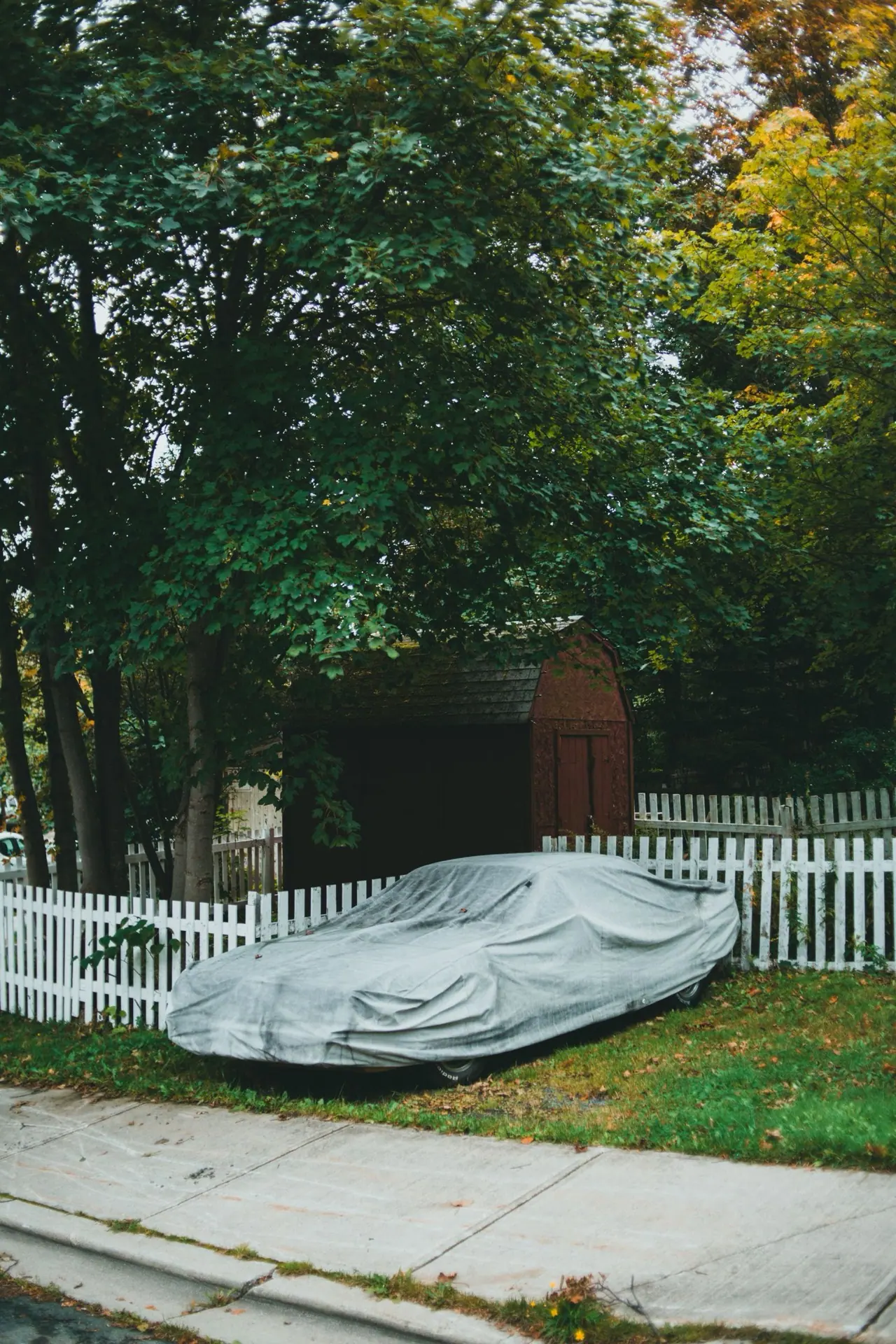
It can be done, and it costs less. CAA North & East Ontario suggests asphalt and a cover if the car has to stay outdoors. The risks below are the ones to plan for.
The risks and the fix
A flat battery
Cold drains a battery that sits. Use a battery tender (CAA), or disconnect it and charge it once or twice over the winter (CAA-Québec). A tender needs a power outlet, so ask any facility whether outdoor spots have one.
Rodents
CAA and Canadian Tire suggest blocking the exhaust and air intakes and using repellents. Remove every plug in spring.
Snow and ice
Lift the wipers off the glass and use a fitted cover (CAA). Brush heavy snow off the cover, not the paint.
Road salt
Wash the car, underneath too, before it goes out. Salt on a car left for months does damage over time.
Bylaws
Street parking has overnight bans, snow bans and time limits. Some cities also bar inoperative vehicles from yards. See rules by city.
Pick the spot
Asphalt beats grass or gravel. Avoid trees that drop sap or branches. Choose a spot where plows will not push snow against the car.
An outdoor space in a storage lot starts from $65/month. See outdoor car storage.
Questions
Should I run the engine now and then?
Canadian Tire mentions driving the car about once a week. Starting it only to idle for a few minutes is not the same, and we have no source that says it helps.
Plastic tarp or a cover?
A breathable, fitted cover. Plastic sheeting traps moisture.
Tell us about your car. We find the spot.
Storage type, car, city and how long. We check what is open near you and reply by email with options and prices.